
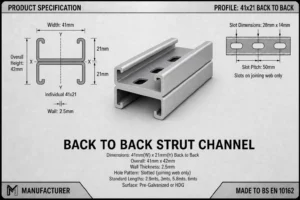
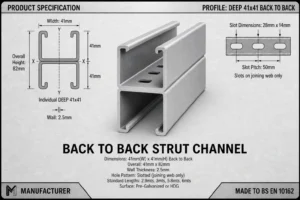
Back-to-Back Strut Channel 41x42mm
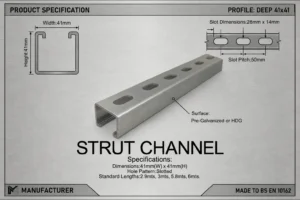
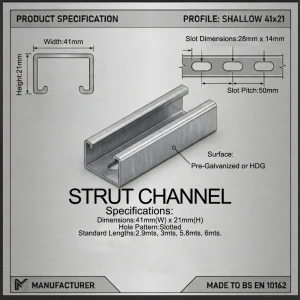
Strut Channel 41x21mm engineered for reliable power and signal transmission.

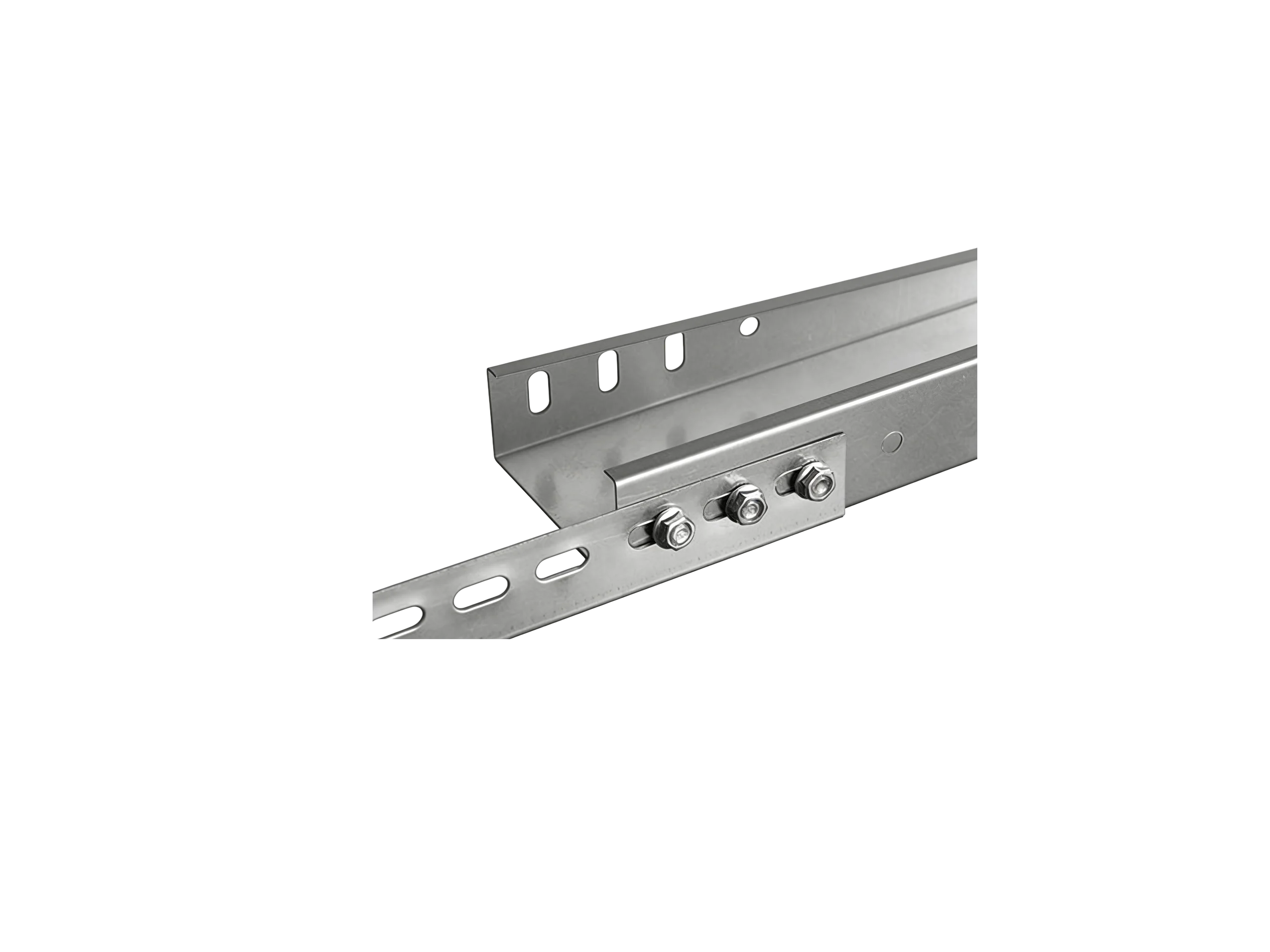
Cable trunking keeps your wires locked and organized! The ultimate setup for electricians who hate messy cables: Hides all wires in a clean, enclosed channel Heavy-duty protection Prevents electrical hazards before they happen Easy access = easy maintenance Perfect for residential, commercial, and industrial jobs
Residential
Hiding TV cables behind the wall
Running wires in home offices for a clean setup
Keeping kitchen appliance cords organized

Office workstations with floor trunking for computer cables
Retail stores hiding POS system wires
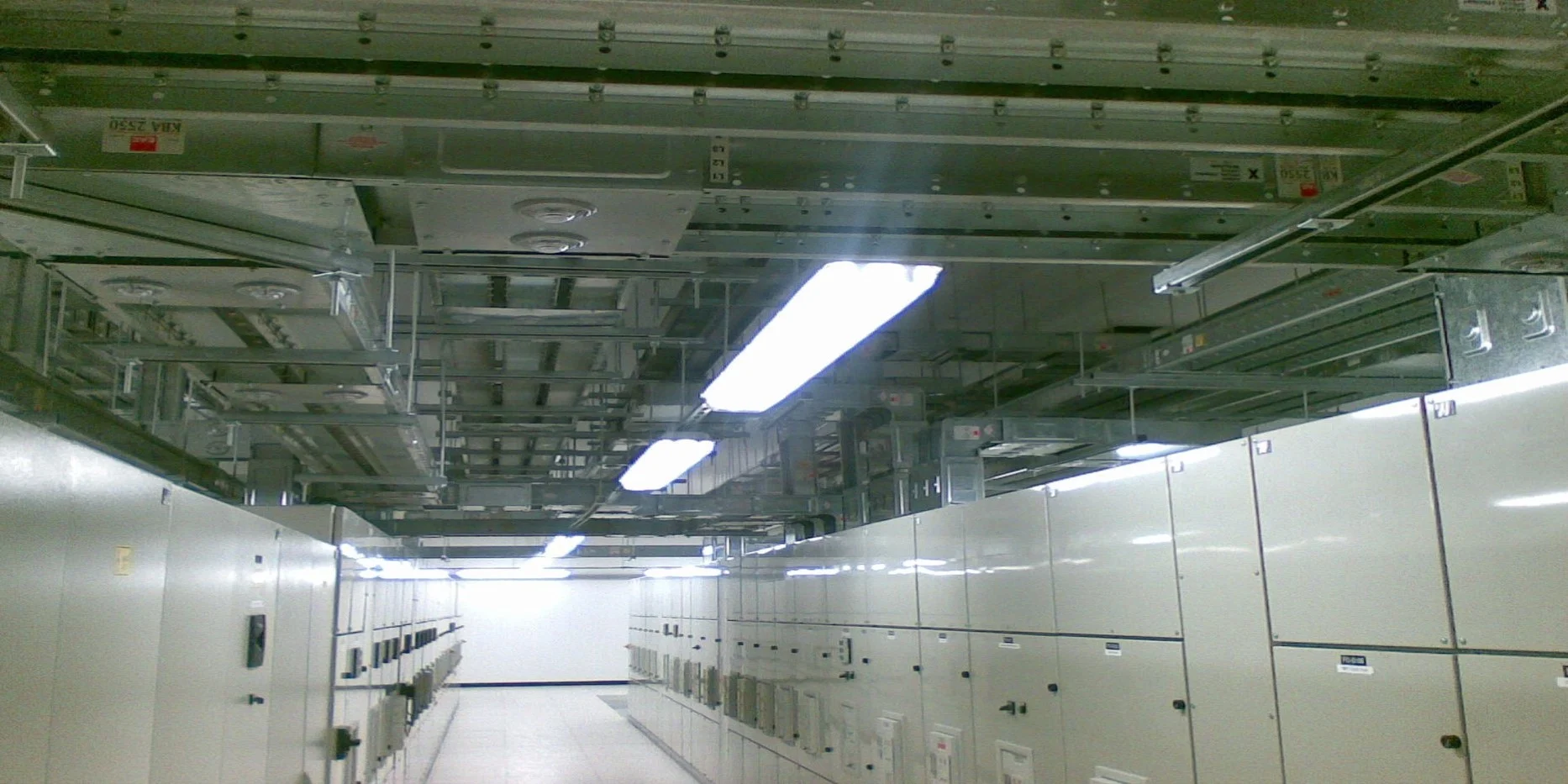
Data centers managing massive cable loops

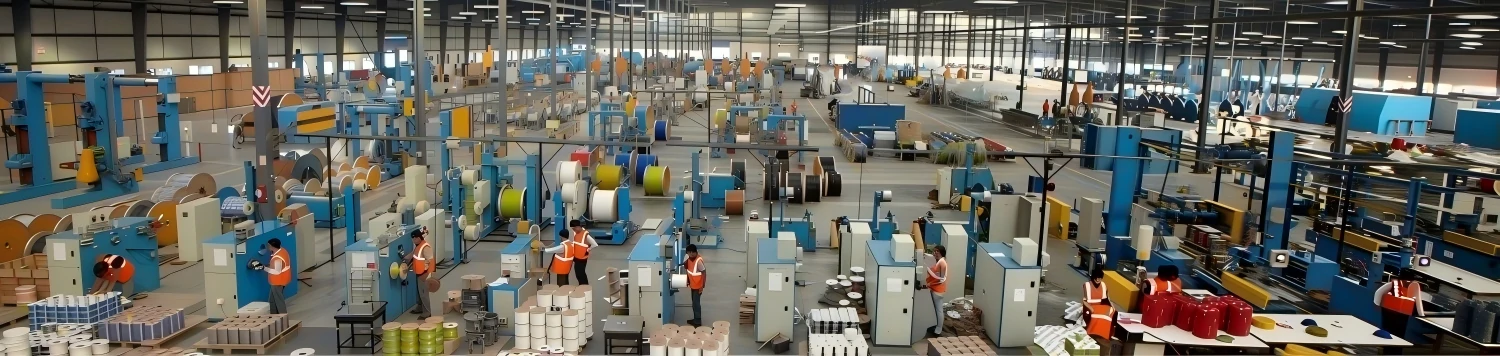
Factories routing heavy-duty power cables
Workshops protecting wires from dust and debris
Warehouses keeping lighting circuits safe and accessible
Residential
Hiding TV cables behind the wall
Running wires in home offices for a clean setup
Keeping kitchen appliance cords organized
Office workstations with floor trunking for computer cables
Retail stores hiding POS system wires
Data centers managing massive cable loops
Factories routing heavy-duty power cables
Workshops protecting wires from dust and debris
Warehouses keeping lighting circuits safe and accessible
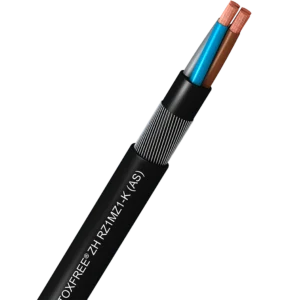
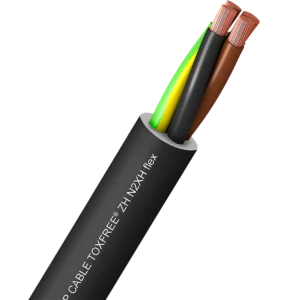

Resists crushing & impact damage

Reinforced Mechanical Protection

Built for Versatility and Durability in Fixed Armoured Applications

Quality You Can Trust – From an Industry Leader

Dedicated Technical Support Whenever You Need It

Excellence in Service, Mastery in Logistics.
Click a question to reveal the answer.
Trunking offers significantly higher volume capacity and easier access. While conduits are excellent for individual branch circuits, trunking allows for the consolidation of multiple circuits in one path. The removable lid makes it far simpler to add or replace cables in the future without “fishing” wires through a pipe.
Multi-compartment trunking features internal dividers that allow for the physical separation of different services—such as high-voltage power, low-voltage signals, and fiber optics—within a single run. This ensures compliance with safety regulations regarding circuit separation and prevents electrical interference between cables.
We offer a diversified material portfolio to meet various project specifications and environmental demands:
Carbon Steel: Available as "Black Steel" for custom post-treatment.
Pre-Galvanized Steel: Available in Regular Spangle and Zero Spangle finishes.
Powder Coated: High-durability Epoxy/Polyester coatings in custom RAL colors.
ZAM (Zinc-Aluminum-Magnesium): A high-performance ternary alloy coating.
Aluminum Alloy: Lightweight and naturally corrosion-resistant.
Stainless Steel: Premium grades including SS304, SS316, and SS316L.
Regular Spangle: Features the traditional "zinc flower" crystallization visible on the surface. It is a cost-effective choice for standard indoor cable containment in commercial buildings.
Zero Spangle: This material undergoes a specialized cooling process to suppress crystal growth, resulting in a smooth, uniform matte finish. Typically, Zero Spangle trunking utilizes a higher zinc coating mass (e.g., Z275), offering superior durability and a more premium aesthetic for high-spec international projects.
Beyond the aesthetic ability to match architectural designs with custom RAL colors, powder coating provides an extra physical barrier against moisture and chemicals. It is frequently used in the global market for color-coding services (e.g., Orange for Fire Alarms, Blue for Data) to simplify long-term maintenance.
SS304: Offers excellent corrosion resistance for general industrial and food-processing environments.
SS316: Contains Molybdenum, which significantly enhances resistance to pitting and crevice corrosion, particularly in chloride-rich or acidic atmospheres.
SS316L: The "Low Carbon" version of 316. It is specifically engineered to prevent intergranular corrosion after welding, making it the gold standard for marine, offshore, and pharmaceutical infrastructure.
Selection depends on the installation environment. For standard commercial use, Pre-Galvanized Steel (DX51D) is preferred. In more corrosive or outdoor environments, Hot-Dip Galvanized (HDG) steel or Stainless Steel (SS304/SS316L) provides superior longevity. For lightweight or chemically volatile areas, high-impact Aluminum is often specified.
Stainless Steel (SS316):
Pros: Exceptional corrosion resistance, ideal for food processing or offshore sites.
Cons: Higher initial cost and heavier weight.
Aluminum:
Pros: Naturally corrosion-resistant, lightweight, and easy to cut/install.
Cons: Lower structural strength compared to steel and higher thermal expansion rate.
ZAM is a next-generation alloy coating that provides up to three to ten times the corrosion resistance of standard galvanization. It is highly "cost-effective" because it approaches the performance of stainless steel at a much lower price point. Its most professional feature is its self-healing property—the coating migrates to protect exposed cut edges and scratches over time.
Price Hierarchy (Low to High): Carbon Steel < Regular Spangle < Zero Spangle < Powder Coated < ZAM < Aluminum < SS304 < SS316 < SS316L.
Corrosion Resistance Hierarchy (Low to High): Carbon Steel < Regular Spangle < Zero Spangle < Powder Coated < ZAM < Aluminum < SS304 < SS316 < SS316L.
We recommend selecting based on the ISO 12944 corrosion classification:
C1–C2 (Indoor/Dry): Pre-Galvanized (Smooth/Spangle).
C3–C4 (Urban/Industrial): HDGAF or ZAM.
C5 (Marine/Offshore): Stainless Steel 316L or ZAM for the highest durability in the international market.
Beyond galvanization, Epoxy Powder Coating is a popular choice for the global market. It allows for color-coding (e.g., orange for fire alarms, blue for data) and provides an extra layer of corrosion resistance. Systems can be finished in any RAL color to match the architectural requirements of the facility.
We provide a comprehensive "Bespoke Engineering" service to accommodate unique project blueprints and complex architectural constraints. Our customization capabilities include:
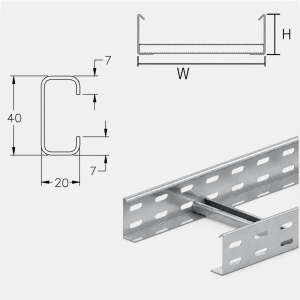
Dimensions: While standard lengths are 2.4m or 3.0m, we offer full flexibility in Length, as well as Width (50mm–800mm+) and Height to suit specific spatial requirements.
Material Gauge (Thickness): Thickness is adjustable from 0.8mm (light-duty) to 3.0mm+ (heavy-duty), ensuring compliance with precise load-bearing calculations.
Structural Engineering: We can integrate Longitudinal Stiffening Ribs (Swaged Ribs) based on cable weight and span requirements to prevent sagging.
Materials & Finishes: Choice of Carbon Steel, ZAM, Aluminum, or Stainless Steel with tailored surface treatments.
Compliance: All products can be manufactured according to international standards or fully tailored to client-specific technical requirements.
Load capacity is calculated based on material gauge, span distance, and the geometric profile of the trunking. To ensure structural rigidity under heavy cable loads, our systems incorporate Longitudinal Stiffening Ribs (also known as Swaged Ribs). High-capacity configurations typically feature two swages on the base and a dedicated stiffening rib on each side-wall to prevent lateral buckling and longitudinal sagging.
To prevent overheating and allow for future expansion, international standards (such as BS 7671 or IEC regulations) recommend a 45% to 50% cable fill factor. You must calculate the total cross-sectional area of all cables and ensure the trunking volume is roughly double that figure to maintain adequate airflow and ease of installation.
Steel and aluminum trunking act as a Faraday Cage. This significantly reduces the impact of external radio frequency interference (RFI) and prevents signal crosstalk between adjacent power and data lines, ensuring the integrity of sensitive electronic systems.
Steel and aluminum trunking systems act as a Faraday cage, providing significant EMI (Electromagnetic Interference) shielding. This is critical when running sensitive data cables alongside power lines, as the metallic enclosure minimizes signal crosstalk and protects equipment from external radio frequency interference (RFI).
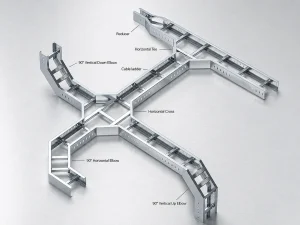
A professional system includes a range of precision-engineered fittings, including:
90° Bends (Gusset or Square): For directional changes.
Tees and Intersections: For branching cable runs.
Couplers/Joiners: To securely connect straight lengths.
End Caps: To seal the system and protect cables from sharp edges.
In metallic systems, electrical continuity is paramount. Every joint should be secured with earth link boding or copper links across the couplers to ensure a low-resistance path to the ground. This protects personnel and equipment in the event of a short circuit.
High-quality steel trunking is inherently non-combustible. For specific project requirements, systems can be tested to maintain circuit integrity under fire conditions. When using uPVC, it is vital to specify LSF (Low Smoke and Fume) or LSZH (Low Smoke Zero Halogen) materials to prevent the release of toxic gases in the event of a fire.