SPECIAL CABLES
A trusted factory-direct supplier for all your LV special cable needs
Benefits of low voltage special cables
TOP CABLE’s low voltage special cables selection provides optimal cable solutions for safety and functionality across applications.
Typical applications of SPECIAL CABLES
Low voltage special cables for industrial facilities
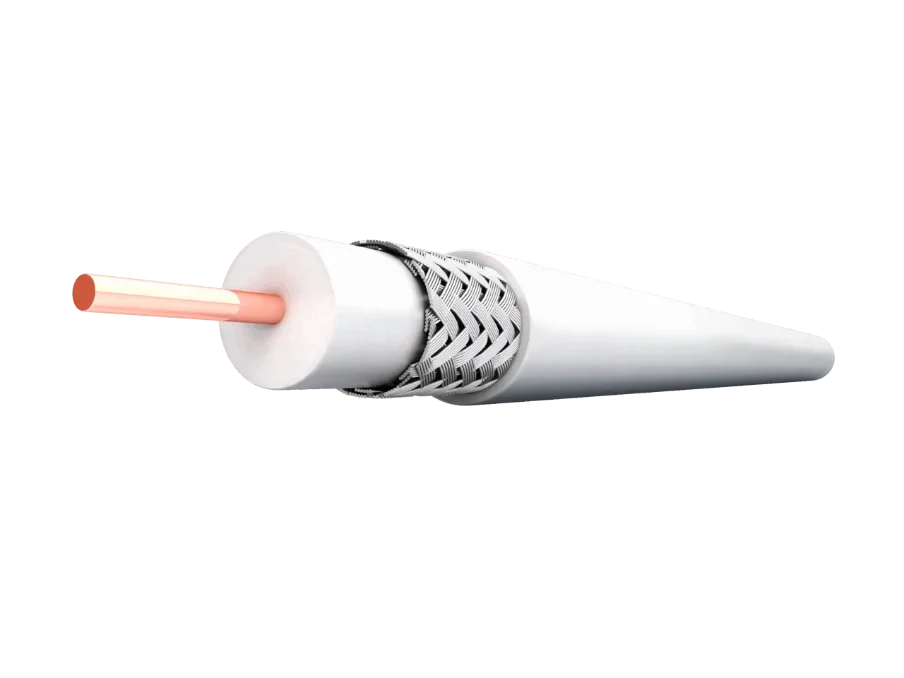
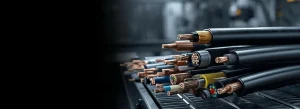
Low-voltage special cables for industrial facilities include H07BQ-F cables, fire alarm cables and flat cables for compact routing. These high-performance solutions ensure reliable operation in lifts, alarms, and automation systems under harsh conditions.
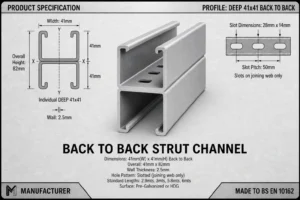
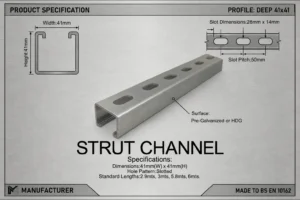
A complete solution from chinne
-
High quality Cable&cable support system manufacturer
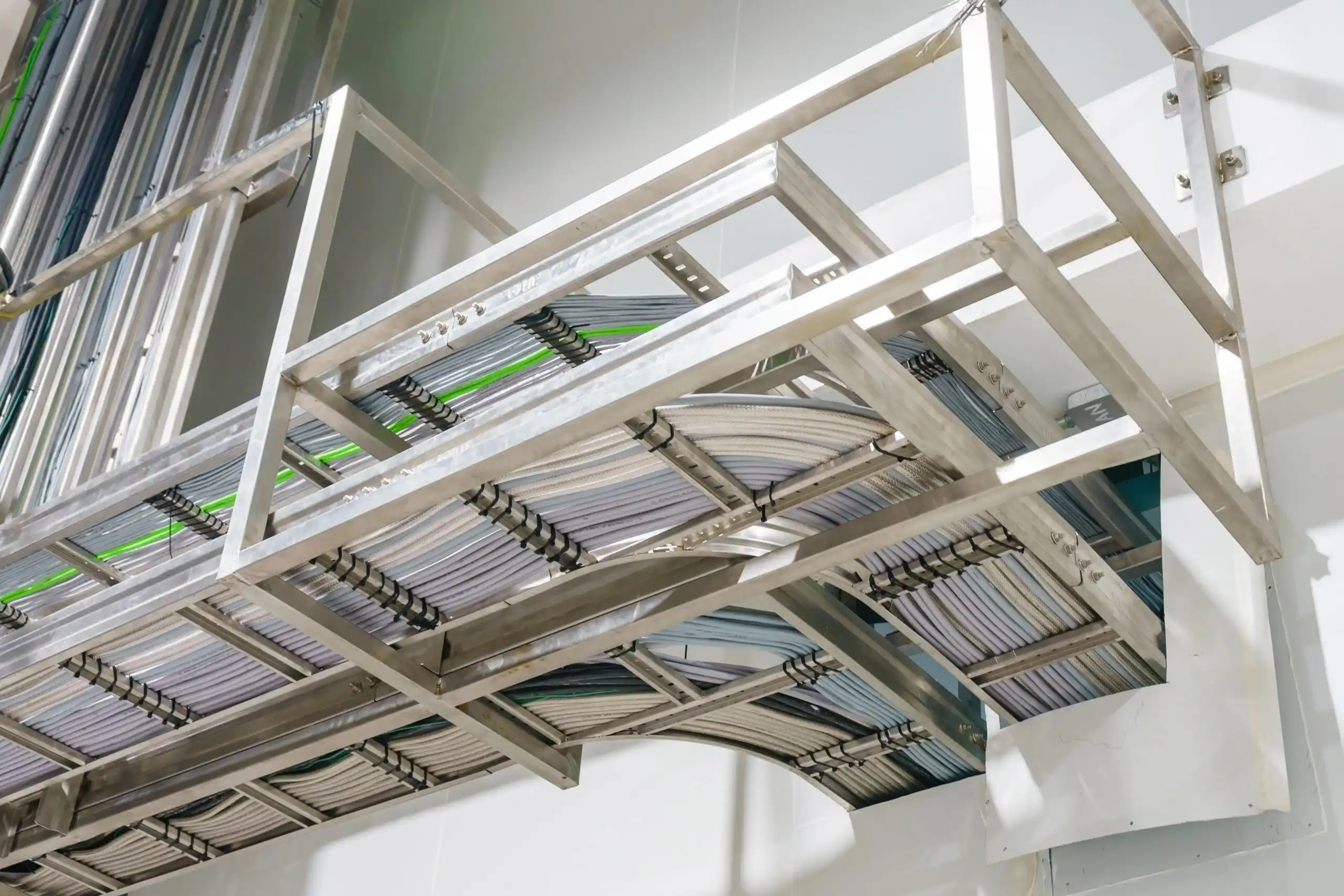
Cable&cable support system manufacturer Chinne is one of Chinese leading cable&cable support system manufacturers which excels in providing best-in-class service.
-
Large
cable&cable support system stockLarge cable&cable support system stock Our large cable&cable support system stock is always ready to be shipped around the globe. -
Quality and
CertificatesQuality/Certificates In our state-of-the-art laboratories we subject our cable&cable support system to stringent product testing and quality controls. -
Best-in-class-service
Best-in-class-service A friendly and eficcient sales team and our excellent logistics will satisfy your cable requirements.
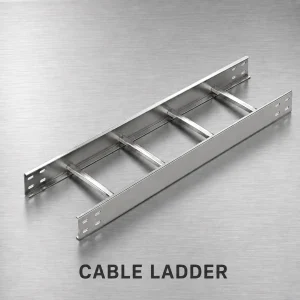
Inward Flanged Side Rail Cable Ladder System
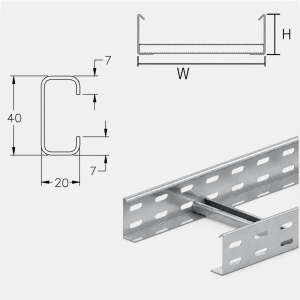
China Standard Cable Ladder Tray
Perforated Cable Ladder
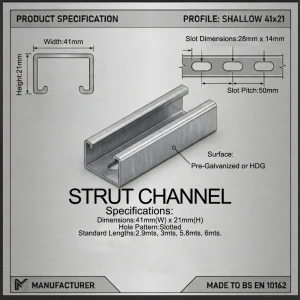
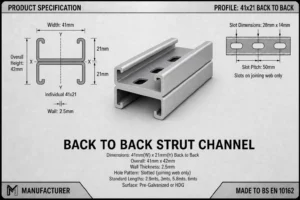
Strut Channel 41x21mm
Cable Trunking
Wire Mesh Cable Tray
Cable Tray
VV-F H05VV-F
RZ1MZ1-K
RZ1 AL
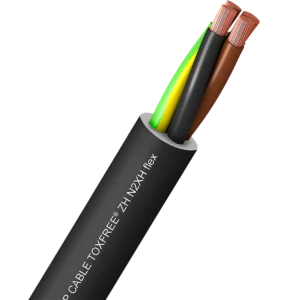
N2XH flex
Why choose our SPECIAL CABLES
-
Resists crushing & impact damage

-
Reinforced Mechanical Protection
-
Built for Versatility and Durability in Fixed Armoured Applications

-
Quality You Can Trust – From an Industry Leader

-
Dedicated Technical Support Whenever You Need It

-
Excellence in Service, Mastery in Logistics.
SPECIAL CABLES FAQs
Click a question to reveal the answer.
- Chinese cable names are usually based on GB/T, JB/T, and national product standards. These names often describe the conductor, insulation, sheath material, fire performance, and application type in a Chinese coding system.
- International projects commonly use IEC standards, European harmonised codes, EN standards, CPR reaction-to-fire classes, or local market specifications. These systems may describe the same cable performance using a different naming method.
- For example, flexible rubber cables may be listed in China as YC or YZW type cables, while international buyers may be more familiar with H07RN-F. Flat lift or travelling cables may appear as TVVB / TVVBP in Chinese catalogues, while European catalogues may use H05VVH6-F or H07VVH6-F.
- The name does not need to be identical as long as the cable meets the required rated voltage, temperature class, bending radius, flame retardant performance, LSZH performance, oil resistance, UV resistance, screening structure, and installation standard.
- For international markets, the safest method is to provide a technical cross-reference table: Chinese standard reference, IEC / EN test method, cable construction, and project specification clause. This avoids the mistake of claiming that two names are automatically equal.
- No. Many special cables are standard catalogue products with fixed construction, conductor size, core number, insulation, sheath, and voltage rating.
- They are “special” because they are used in demanding applications such as cranes, elevators, industrial automation, fire alarm systems, marine panels, PV systems, or machine tools.
- True custom cables are only required when the buyer needs a non-standard combination of core arrangement, shielding, armour, compound, colour, voltage rating, or communication element.
- A single cable flame test checks how one cable behaves when exposed to flame.
- A bunched cable flame test checks how a group of cables behaves when installed together vertically or in cable trays.
- This is important because cables installed in groups create a larger fire load. A cable that performs well alone may behave differently when many cables are bundled together.
- For cable trays, risers, electrical rooms, and industrial routes, bunched flame performance is often more relevant than single wire flame performance.
- Flame retardant cable is designed to reduce flame spread. Its purpose is to prevent fire from propagating along the cable route.
- Fire resistant cable is designed to maintain circuit integrity for a defined time during fire.
- Fire resistant cables are used for emergency lighting, fire alarm circuits, smoke extraction systems, fire pumps, and other life safety systems.
- These two terms are not the same. A cable can be flame retardant without being fire resistant.
- Fire alarm cables often carry low voltage signals, but the circuit function is safety-critical.
- They may require controlled capacitance, stable impedance, twisted pairs, screening, LSZH sheath, or fire resistant construction.
- In long alarm loops, poor cable selection can cause signal instability, false alarms, or communication failure.
- For this reason, fire alarm cable selection should consider both electrical signal quality and fire performance.
- Pairs are usually used for two-wire signal circuits, differential signals, and many standard instrumentation loops.
- Triads are used where three-wire transmitters, RTD circuits, or specific measurement systems require three conductors grouped together.
- The choice affects noise rejection, wiring accuracy, termination method, and maintenance identification.
- For process plants, oil and gas facilities, and automation systems, correct pair or triad selection helps reduce signal errors.
- XLPE insulation has better thermal performance than many standard thermoplastic insulation materials.
- It offers good electrical properties, ageing resistance, and temperature stability.
- XLPE is often selected where the cable may face higher operating temperature, overload conditions, or long service life requirements.
- For instrumentation and control circuits, XLPE can also support stable insulation performance in demanding industrial environments.
- VFD motor cables are used between variable frequency drives and motors. They must handle fast switching waveforms, harmonics, and high dv/dt stress.
- Poor cable selection can cause motor insulation stress, bearing currents, EMC interference, and unstable control signals nearby.
- Special VFD cables often use symmetrical grounding conductors, low impedance screens, or dual shield structures.
- Cable length, drive output waveform, motor insulation, and grounding design must be considered together.
- Solar DC cables are exposed to outdoor conditions for many years.
- They must resist UV radiation, ozone, temperature cycling, moisture, and mechanical handling during installation.
- Solar cables also operate in DC systems, where arc behaviour and insulation performance are different from many AC circuits.
- Ordinary flexible cords should not be used as a substitute for PV string cable unless the required DC voltage, outdoor durability, and standard compliance are fully proven.
- Outdoor flexible cables can fail because of UV exposure, ozone attack, temperature cycling, abrasion, and repeated bending.
- The most common problems are sheath cracking, conductor fatigue, insulation damage, and water ingress.
- For cranes, festoon systems, outdoor machinery, and temporary power routes, the cable must match the required bend radius, flex cycle, tensile load, and outdoor rating.
- “Outdoor cable” should not be selected only by colour or sheath thickness.
- Lift travelling cables are designed for repeated vertical movement.
- They require controlled flat geometry, flexibility, strain relief, and sometimes integrated support elements.
- Incorrect installation can cause twisting, uneven tension, conductor breakage, or sheath damage.
- Important checks include suspension length, bending radius, tension control, core arrangement, and compatibility with lift travelling systems.
- Wind turbine cables may face torsion, vibration, temperature changes, UV exposure, and lightning-related transients.
- Tower cables and nacelle cables require strong mechanical anchoring and careful route planning.
- Cable replacement can be difficult, so long-term durability is important.
- Selection should consider flexibility, screen continuity, grounding, sheath resistance, and maintenance access.