


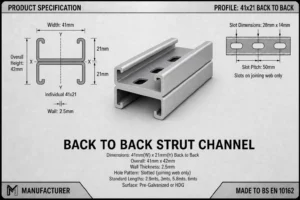
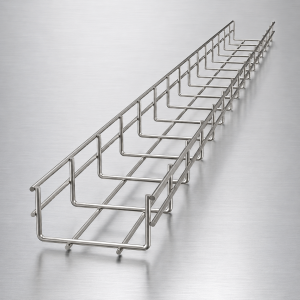
Back-to-Back Strut Channel 41x42mm
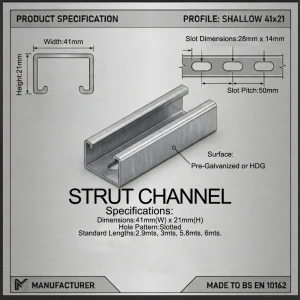
Strut Channel 41x21mm engineered for reliable power and signal transmission.

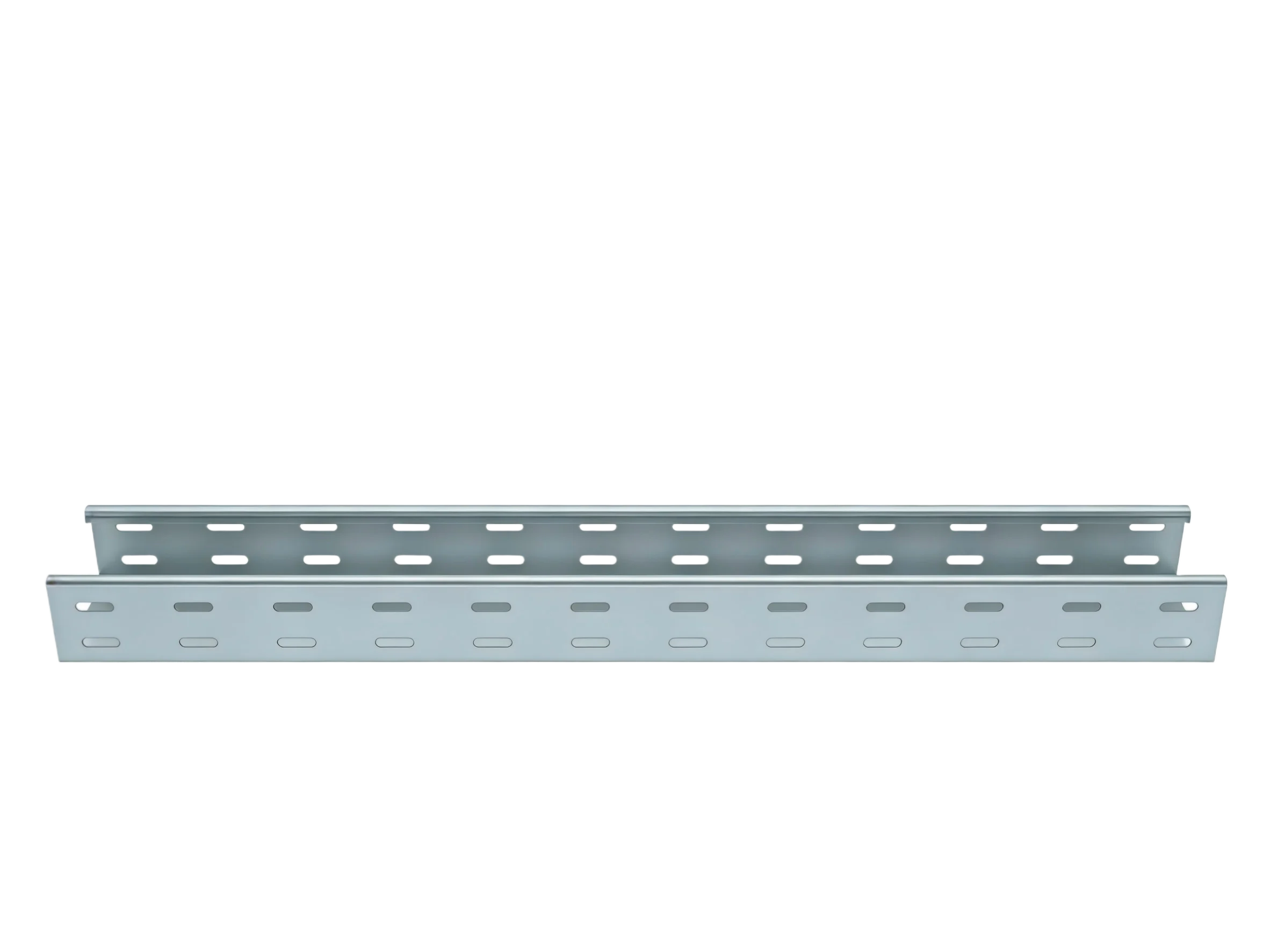
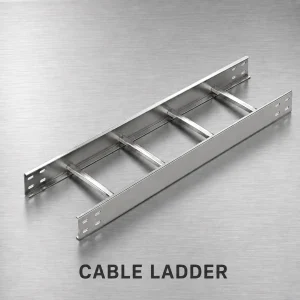
Light weight and heavy load. Simple structure and quick installation. Beautiful appearance and good heat dissipation. Easy to check and clean the cable, easy to maintain and update.
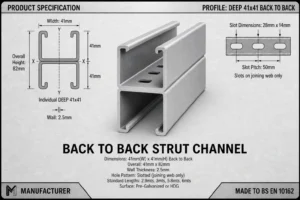
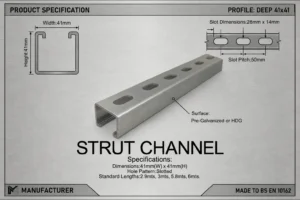
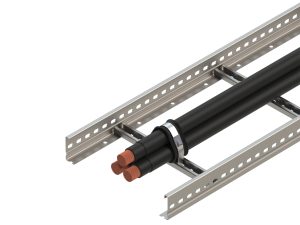
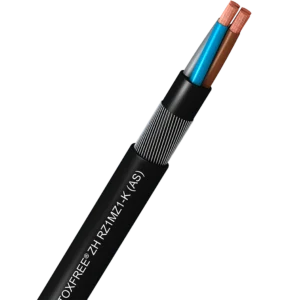
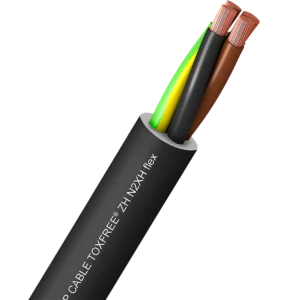

Resists crushing & impact damage

Reinforced Mechanical Protection

Built for Versatility and Durability in Fixed Armoured Applications

Quality You Can Trust – From an Industry Leader

Dedicated Technical Support Whenever You Need It

Excellence in Service, Mastery in Logistics.
Click a question to reveal the answer.
A perforated cable tray is a rigid structural system used to securely support and distribute insulated cables. The uniform hole patterns provide essential ventilation to prevent heat buildup in power cables while allowing for easy drainage of moisture and debris.
Perforated trays offer superior airflow, which prevents the derating of cable current-carrying capacity. They are lighter, easier to install, and allow for cables to enter or exit through the perforations at any point, providing significantly more flexibility.
These trays are ideal for high-voltage XLPE/PVC Power Cables, multicore control cables, and instrumentation wiring. The ventilation is particularly critical for cables that generate heat during continuous operation in heavy-duty industrial facilities.
Perforated systems are the standard for Data Centers, Oil & Gas refineries, Power Substations, and Solar Farms. They are also widely used in commercial high-rise infrastructure where accessible and scalable cable management is required.
We offer a diversified material portfolio to meet various project specifications and environmental demands:
Carbon Steel: Available as “Black Steel” for custom post-treatment.
Pre-Galvanized Steel: Available in Regular Spangle and Zero Spangle finishes.
Powder Coated: High-durability Epoxy/Polyester coatings in custom RAL colors.
ZAM (Zinc-Aluminum-Magnesium): A high-performance ternary alloy coating.
Aluminum Alloy: Lightweight and naturally corrosion-resistant.
Stainless Steel: Premium grades including SS304, SS316, and SS316L.
In the HDGAF process, the tray is fully punched and formed before being submerged in molten zinc. This ensures that the edges of the perforations—the most vulnerable points for oxidation—are completely sealed with a thick protective layer.
While SS304 is excellent for general use, SS316L contains Molybdenum and lower carbon levels. This prevents pitting from chlorides (salt) and intergranular corrosion after welding, making it mandatory for maritime and offshore applications.
ZAM is a high-tech ternary alloy coating providing up to 10 times the corrosion resistance of traditional galvanizing. Its most professional feature is its self-healing property: when a tray is cut or scratched, the alloy migrates to protect the exposed steel edges.
For long-term reliability, HDGAF and SS316L are the most durable options. However, ZAM is rapidly becoming the preferred high-durability choice due to its superior performance in high-ammonia or saline environments.
Stainless Steel offers exceptional strength and chemical resistance but is heavier and higher in cost. Aluminum is lightweight (easier for ceiling installations), naturally corrosion-resistant, and non-magnetic, but has a higher thermal expansion rate.
ZAM offers near-stainless-steel performance at a price point closer to galvanized steel. For large-scale procurement, it provides the best Total Cost of Ownership (TCO) by extending service life without the extreme cost of SS316L.
C1–C2 (Dry/Indoor): Pre-Galvanized.
C3 (Industrial): Powder Coated or Thick-film Galvanized.
C4–C5 (Marine/Coastal): HDGAF, ZAM, or Stainless Steel 316L.
The hierarchy follows an ascending path for both price and protection: Carbon Steel < Regular Spangle < Zero Spangle < Powder Coated < ZAM < Aluminum < SS304 < SS316 < SS316L.
We provide a "Bespoke Manufacturing" service including:
Dimensions (Full flexibility in Length, Width, and Height);
Material Selection (Carbon steel to ZAM/SS);
Thickness (1.0mm to 3.0mm+);
Surface Treatment (Custom RAL colors);
Structural Design (Custom hole patterns and optional stiffening ribs).
Load capacity depends on material gauge, side-wall height, and support span. While our standard profiles are highly rigid, we offer Longitudinal Stiffening Swages (reinforcing ribs) along the base as an optional upgrade for heavy-duty applications upon client request.
While the Return Flange is the international standard for safety and strength, we also offer:
Straight Edge: For light-duty, cost-effective indoor use.
Safety Edge (Hemmed): 180° fold for maximum cable protection and installer safety.
C-Profile / Inward Flange: For enhanced lateral stiffness in high-load scenarios.
According to international standards (like NEC or IEC), a 40–50% fill ratio is recommended. This ensures sufficient space for airflow and allows for future expansion without overloading the tray's mechanical capacity.
A precision-engineered pattern maximizes ventilation while maintaining metal density. For specialized heavy-load scenarios, the integration of stiffening swages ensures the tray supports heavy power cables without bending.
Yes. We offer high-durability Epoxy Powder Coating in any RAL color. This is widely used to distinguish systems: e.g., Red for fire safety, Orange for high-voltage, and Green for security/telecom.
Steel and aluminum trays provide Electromagnetic Interference (EMI) shielding. By keeping sensitive data cables within a grounded metallic tray, external RFI (Radio Frequency Interference) is significantly reduced.
A continuous, grounded tray system acts as a low-impedance path. This minimizes the loop area for electromagnetic induction, critical for protecting sensitive PLC and data systems.
Electrical continuity is vital. Every section must be connected using Earth Bonding Links across the couplers. This ensures the system safely discharges fault currents to the main grounding grid.
Metallic trays are non-combustible. For critical circuits, we offer systems tested for E90 Fire Integrity, maintaining power for at least 90 minutes during an emergency.
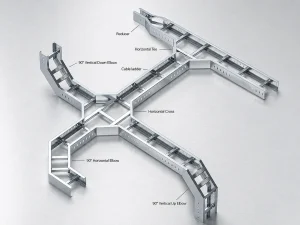
A professional installation requires modular components including 90° Elbows, Tees, Crosses, Reducers, and Internal/External Risers, along with Splice Plates and Hold-down Clips.
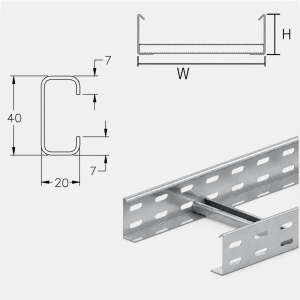
A Return Flange (an extra fold at the top of the side-wall) significantly increases load-bearing capacity and protects cable insulation and installers' hands from sharp edges.
In the international market, we specify Expansion Splice Plates. These allow for natural metal expansion and contraction during temperature swings without compromising mechanical connections.
Yes. High-quality manufacturing includes a deburring process or Safety-Edge technology to ensure all holes and edges are smooth, preventing damage to cable jackets.